
 (+86)0755-21023851
 gque@quixave.com
Ultra-Low Speed Roller Bottles for Adherent Cell Culture (Core Feature: 0.1–2 rpm Ultra-Low Rotation Speed, Compatible with CO₂ Incubators)
The ultra-low speed roller bottle system is a low-shear force equipment specifically designed for the monolayer culture of adherent cells. With its core specification of 0.1–2 rpm precise and stable rotation speed, this system enables cells to adhere uniformly to the inner wall of roller bottles and grow into dense monolayers, and is widely applied in cell preparation for vaccines, antibodies, and gene therapy.
1. Core Parameters (Industry Mainstream Standard)
• Rotation speed range: 0.1–2 rpm (the optimal ultra-low range for adherent cell culture); accuracy ±0.1 rpm. Equipped with stepper/brushless motor, enabling shock-free start-stop operation.
• Compatible roller bottle specifications: Suitable for standard roller bottles with diameter Φ110–120 mm (1–2 L volume, 490–850 cm² surface area).
• Bottle position configuration: 2–4 positions for small-scale culture, 6–12 positions for pilot-scale culture; supports stackable multi-layer layout, and can be placed inside incubators.
• Control and environmental compatibility: Digital PID control with LED/LCD display and timing function (maximum 99 h); operates stably in environment of 37℃, 5% CO₂ and humidity ≥85%; the body is manufactured with 304 stainless steel or aluminum alloy, which is corrosion-resistant and easy to disinfect.
• Drive and safety: Maintenance-free brushless DC motor; equipped with power-off memory, rotation speed alarm, and optional backup battery.
2. Key Design (Exclusive for Adherent Cell Culture)
(1) Ultra-low stable rotation speed: The 0.1–2 rpm rotation avoids high shear force, prevents cell detachment and enables uniform cell adhesion on the bottle wall. Excessively high rotation speed tends to cause cell suspension or death, while excessively low rotation speed leads to uneven nutrient distribution and local overgrowth of cells.
(2) Gentle start-stop: The stepper motor achieves soft start and stop without instantaneous impact, protecting the adherent cell layer.
(3) Compatibility with incubators: The split design (external control box, internal roller frame) saves internal space of the incubator and reduces the risk of contamination; supports both vertical and horizontal placement.
(4) Low-shear flow field: The slow rotation of roller bottles drives the culture medium to form a thin laminar flow, which enables uniform delivery of oxygen and nutrients, timely removal of metabolic wastes, and promotes dense cell growth.
3. Typical Application Scenarios
• Vaccine production: Culture of Vero and MDCK cells for rabies and influenza vaccines.
• Antibody/protein expression: Large-scale culture of CHO and HEK293 cells.
• Gene therapy: Culture of lentivirus/adenovirus packaging cells such as 293T cells.
• Cell process development: Medium screening, serum-free adaptation, and parallel experimental comparison.
4. Selection Key Points
(1) Rotation speed range: Must cover 0.1–2 rpm, with accuracy ≤0.1 rpm.
(2) Bottle position and specifications: Match the required roller bottle diameter (Φ110–120 mm) and quantity.
(3) Incubator compatibility: Split design is preferred, and confirm that the dimension fits into conventional CO₂ incubators.
(4) Control functions: Digital display, timing, power-off memory and rotation speed alarm are required features.
5. Usage Recommendations
• Seeding density: Generally 1–3×10⁵ cells/mL. After seeding, let the cells stand for 4–6 h for initial adhesion, then start the roller bottle at 0.5–1 rpm.
• Rotation speed adjustment: Set the speed to 0.5 rpm at the initial stage, and increase it to 1–1.5 rpm after cells complete adhesion; do not exceed 2 rpm to prevent cell detachment.
• Medium change cycle: Change medium every 2–3 days, and pause the roller bottle during medium change to reduce disturbance to cells.
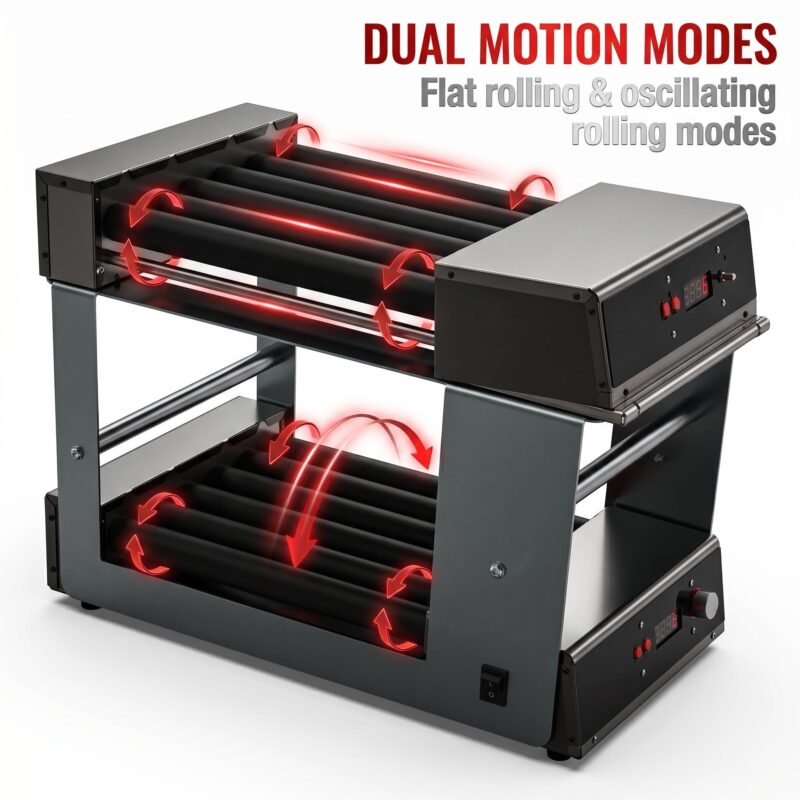
The novel low-speed adherent cell culture roller bottle system manufactured by GLTLab supports both single-layer and multi-layer configurations. It is compatible with multiple control modes, including online control, external controller operation and RS485-based control, to satisfy diversified user requirements. Additionally, this system features a compact size, and its stainless steel body is suitable for use in slightly acidic and carbon dioxide-containing environments.
{“AIGC”: {“Label”: 1, “ContentProducer”: “001191350200737895515300000”, “ProduceID”: “D4520A978EEC4340814AC03EE8870B04”, “ReservedCode1”: “70qx6swq3fbouzx10itpxqsbpylm1zzc”, “ContentPropagator”: “001191350200737895515300000”, “PropagateID”: “D4520A978EEC4340814AC03EE8870B04”, “ReservedCode2”: “2ur4gttd17s4zn7htk36x57w4r17khcm”}}